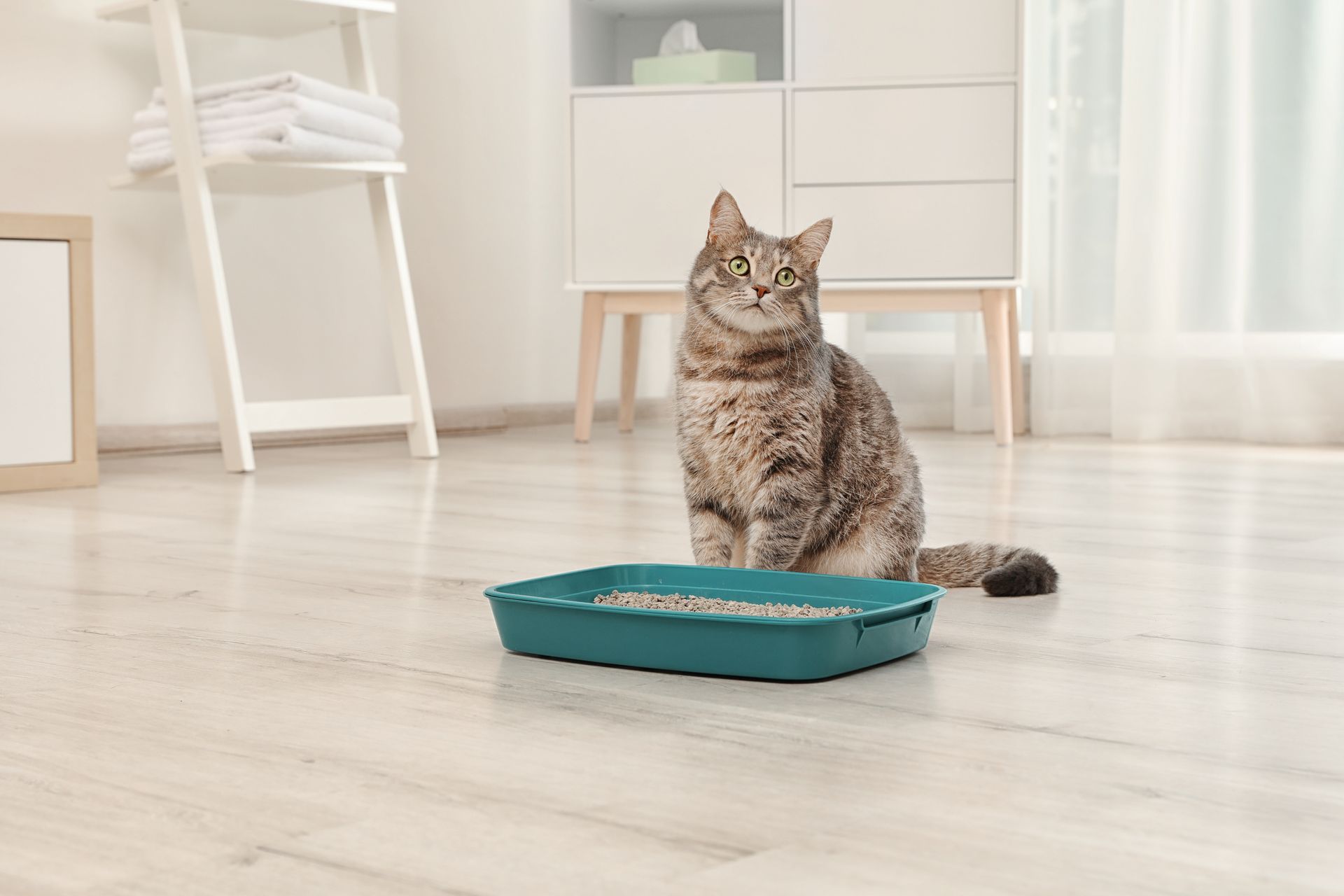
Cats tend to eliminate on surfaces they find most appealing to do so. Litter should be chosen to appeal to the cat and not the people. In general, cats prefer a texture similar to sand and no scent. It also means the litter must be clean and the box itself washed as needed but at least once weekly. If residual odor exists then can soak with Anti-Icky Poo. It is recommended to have at least one more litter box than the number of cats so that an unsoiled litter box is always available.
Litter boxes are best placed in a quiet area and with no cover at least to start. Boxes need to be at least 1 ½ times the body length and sides may need to be cut lower for kittens and older, arthritic cats to easily get in and out of. If a cat develops an aversion to using a litter box then an anti-anxiety medication is warranted. Different litter types, litter box types and litter locations can be tried. A litter box additive called Cat Attract which adds an earthy scent can be helpful.
To discourage a cat from using an inappropriate surface, the surface needs to be cleaned and a deodorizer used repeatedly. Wall-to-wall carpeting may need to be replaced. Applying a strong citrus scent such as lemon scented soap to the surface will make it less appealing as well as covering with thick plastic sheeting, plastic carpet runner with nubs up, double-sided sticky tape or motion sensor with compressed air (SSSCAT). Some cats will not eliminate where they are fed so food dishes can be placed on the inappropriate surface.
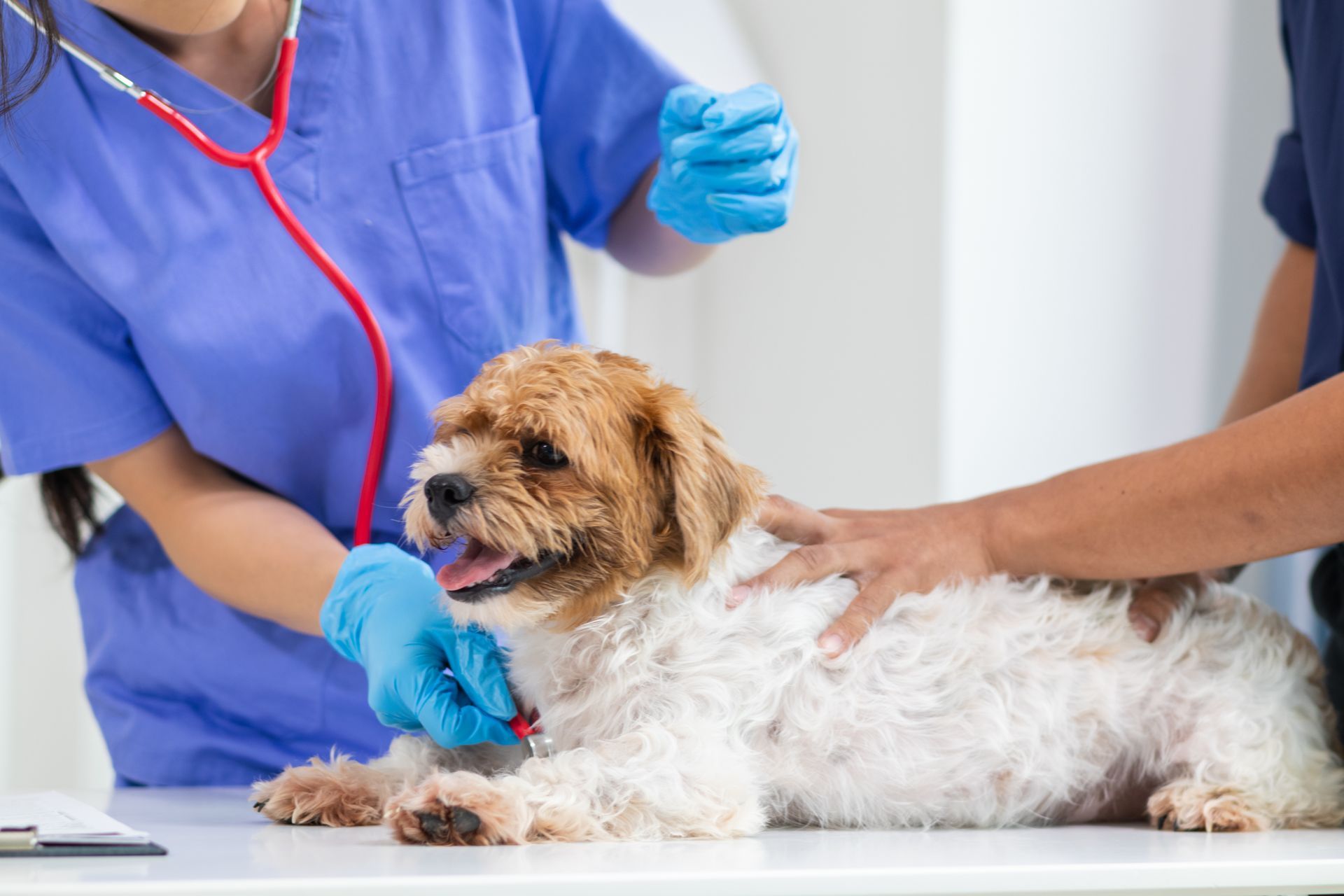
Behavioral modification is going to be important regardless of the cause of the problem – behavioral or medical. It is imperative to rule out medical problems first. Medical problems can include a bladder infection or stone, increased water consumption due to an illness and more commonly in older cats, arthritis. Lastly, an incompletely understood condition called feline idiopathic cystitis can lead to inappropriate urination, straining to urinate, increased urination frequency and often times blood in the urine.
If the problem is determined not to be a medical problem and correction of a litter box aversion is unsuccessful, then an anti-anxiety medication is likely needed. House soiling needs to be distinguished from marking behavior and may be difficult to distinguish in some cases. Urine marking can include urination on a vertical surface, urinating on new furniture or dirty laundry or on the bed; near a door or window; still urinating sometimes in the litter box and sometimes following a change in the household especially a new pet or person.
In the case of urine marking the earlier anti-anxiety medication is started, the more likely the problem will be controlled. While the medications are very safe and generally given just once a day, they can take 2 months or more to determine their effectiveness.
A cat may mark due to presence of other cats both inside and outside of the home. Marking can occur in response to stress or anxiety and is most common when there are 3 or more cats in the household. If the problem is due to social interactions inside the home, it maybe necessary to determine which cats do not get along. Keep these cats in separate parts of the home with their own litter and sleeping areas. Allowing the cats together for positive experiences, such as feeding, treats and play sessions, helps them to get used to the presence of one another. Again, with marking behavior, anti-anxiety medications need to be started immediately and any social concerns addressed to have the best chance of success. After several months of marking behavior, anti-anxiety medications may not be helpful as it becomes a learned behavior.
As a last resort the cat can be confined to a small area such as a large plastic carrier with a litter box. After the cat consistently uses the litter box can then expand cat’s access to a larger area such as the bathroom and then a larger room, etc. until it is allowed full access.
Many people waste time and effort on the wrong approach until they want to get rid of their cat. Even if your cat occasionally eliminates inappropriately, please contact your veterinarian promptly.